Is the UC Davis MSBA Right for Engineers?
"I’ve come to see analytics as the bridge that connects the engineering world with the business world."
Sunday mornings were always the most exciting part of my week. While we ate breakfast, my father would play documentaries featuring massive robotic arms assembling cars in huge automotive plants.
I was completely mesmerized by how these machines moved. That early fascination set me on a path toward mechanical engineering because I wanted to understand how these systems worked.
Fast forward to my final-year project as an undergraduate in Pakistan, where I built my own robotic arm. The real challenge wasn’t just creating the machine but making it perform better by reading the data of the vibration patterns, operating time, costs and efficiency. That’s when it clicked for me that engineering is fundamentally driven by data.
At the same time, I was running a small bakery business. Managing its marketing, operations and customer behavior showed me that business decisions were also rooted in data like budget trends and sales patterns. Seeing engineering and business both depend on data is what ultimately pushed me toward analytics.
Why a UC Davis MSBA?
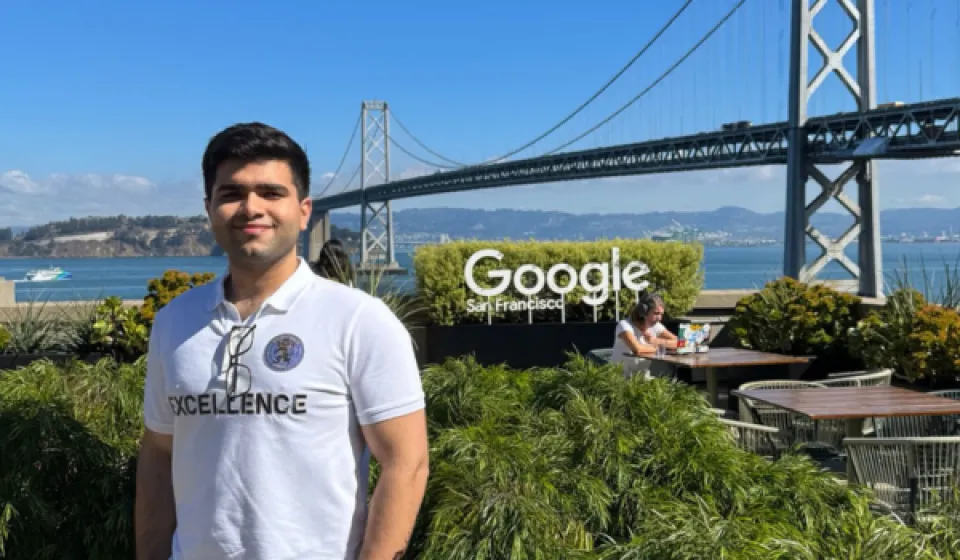
When I thought about where analytics, innovation and technology converge, California naturally became the destination and UC Davis immediately stood out. That’s what motivated my move from mechanical engineering in Pakistan to studying business analytics at the UC Davis Graduate School of Management.
When I was researching MSBA programs, the UC Davis program in downtown San Francisco would put me right in the center of California’s tech ecosystem, surrounded by the world’s most innovative talent, cutting-edge companies and ideas that live and breathe data.
Another factor is that the MSBA program has consistently been ranked No. 1 in return on investment over the past few years, according to Quacquarelli Symonds (QS), the world’s largest global higher education network.
On top of that, the year-long practicum project for an industry partner made it clear that this was not just academic learning, it was hands-on training.
In addition to the curriculum and hands-on training, there are many ways to get more involved. I joined the Director’s Student Advisory Committee (DSAC) to apply my leadership skills in a meaningful way. Within the career committee, I’m helping communicate and shape upcoming initiatives like workshops on essential industry relevant tools and alumni speaker sessions, and supporting my classmates in building stronger career prospects.
Data Analytics Bridges Business and Engineering
I’ve come to see analytics as the bridge that connects the engineering world with the business world. When you work with machines, you quickly realize that every decision—efficiency, reliability or productivity—is driven by data.
And when you step into business, the same principle applies in operations, supply chain and even customer behavior. Having experienced both sides firsthand, I’ve learned that data is the common language.
My Secret of Starting a Conversation
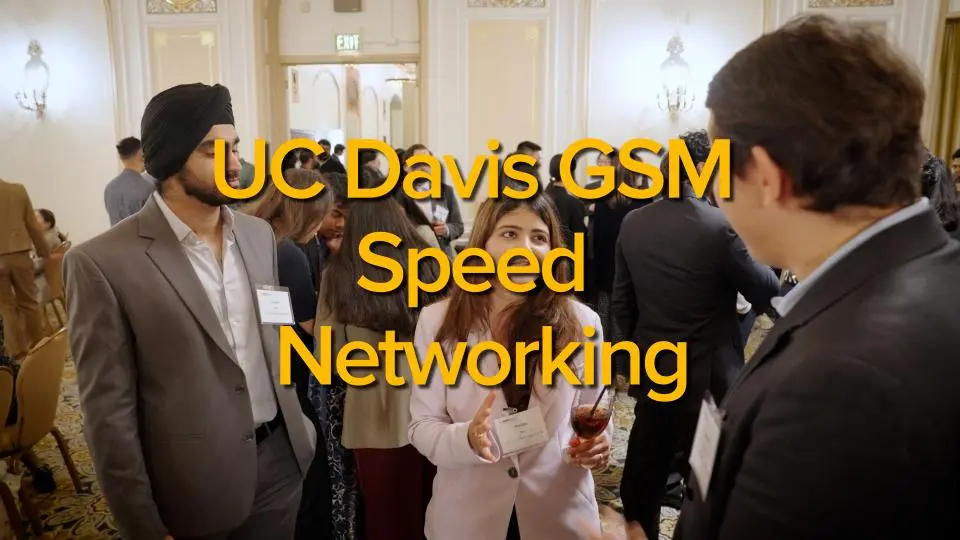
Each year, the MSBA program hosts a signature Speed Networking event on the waterfront in San Francisco. Moving from one table to the next, students have the opportunity to quiz alumni and company executives on the latest industry trends, career advice and their lessons learned.
I prepared for Speed Networking by shaping my journey into a clear, authentic story about how I moved from engineering to analytics. I combined my experience building robots with the marketing and entrepreneurial lessons I learned while running a bakery. That helped me explain why I chose UC Davis and what drives me.
I met professionals from Adobe, TikTok, Visa and Walmart to understand how they use data in their work.
Meeting UC Davis alum Ayush Tripathi MSBA 20, a senior manager of marketplace strategic initiatives at Walmart, was a highlight because I wanted to learn about his transition from mechanical engineering into analytics. After sharing my story, I listened to the alumni’s journeys, and how they navigated the industry.
The event was genuinely a turning point for me. Speaking with professionals from different industries showed me how much confidence comes from simply stepping forward and starting conversations.
It gave me the chance to engage with alumni and industry experts. Those conversations helped me polish the way I ask questions, articulate my story and present myself in a room full of accomplished people.
My personal goal for the Speed Networking event was to build what I consider one of the most valuable currencies today—my network.
Related content
Speed Networking in the City: Building Bridges from Tech to Business
Career insights from Adobe, TikTok, Visa and Walmart alumni
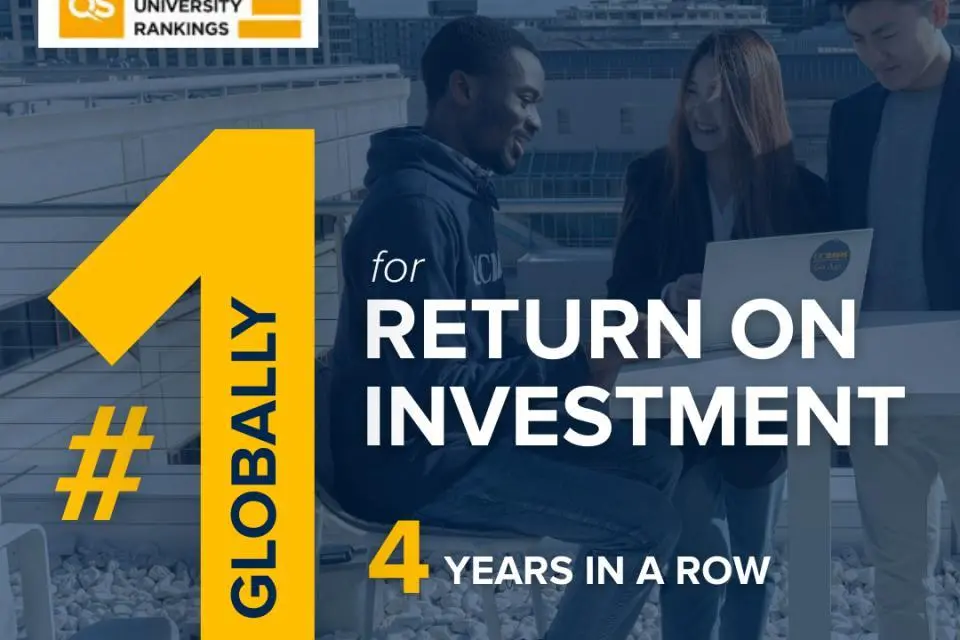
QS Ranks UC Davis MSBA No. 1 Globally for Return on Investment for Fourth Year
Plus, No. 5 worldwide for “Value for the Money”; top 20 overall in U.S. and top 40 worldwide
What Does an AI Engineer Do?
MSBA alumnus Kshitiz Parashar shares insights on compelling, impactful AI career path