Global Leaders Strategize on Solutions at UC Davis Food and Health Summit
The IIFH Partner Summit 2026: Signals and Strategy in Food & Health—Technology and Investment
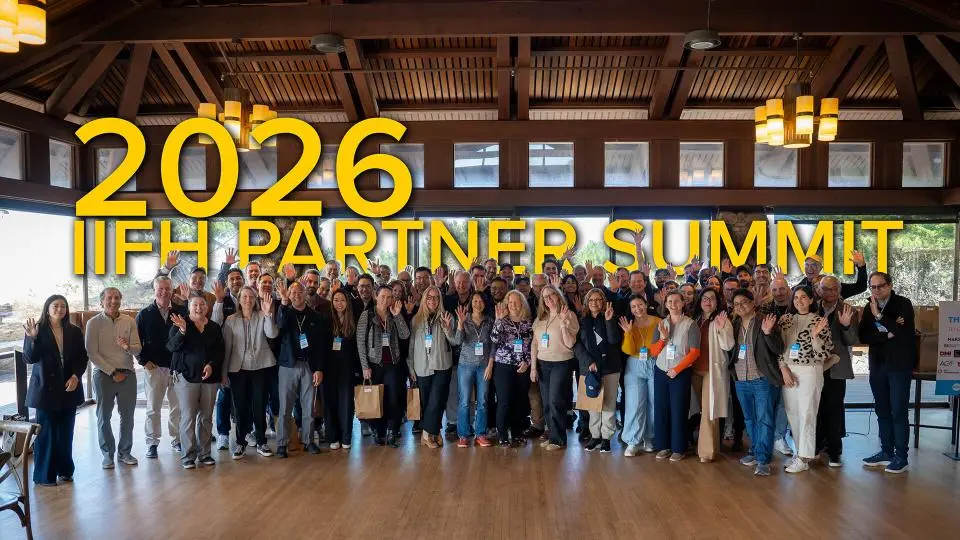
Universities are driving groundbreaking discoveries in food, health, and agricultural innovation, but transforming research into scalable companies requires more than great science alone.
At UC Davis and the Innovation Institute for Food and Health (IIFH), collaboration across researchers, startups, investors, and industry partners is helping bridge that gap.
The IIFH Partner Summit 2026: Signals and Strategy in Food & Health—Technology and Investment on May 13–14, 2026, brought together researchers, scientists, venture capitalists, CEOs and industry executives to examine the signals shaping the future of food and health systems, from biotechnology and artificial intelligence to nutrition, sustainability and shifting consumer behavior.
The Summit convened at the historic Asilomar Conference Grounds, a venue long recognized for hosting consequential scientific convenings—including the landmark 1975 meeting that helped shape the trajectory of modern biotechnology.
Rather than predicting a single future, the program explores signals that may presage a range of possible outcomes, pairing use-inspired research with focused discussion on strategic, commercial and capital allocation implications.
By leveraging Asilomar’s legacy as a place for reflection at moments of emerging capabilities, the Partner Summit supports informed judgment and long-term decision-making—allowing each organization to interpret how evolving scientific and market dynamics shape its own strategic path.
Video Transcript
H. Rao Unnava
Dean, UC Davis Graduate School of Management
I’m Rao Unnava, the dean of Graduate School of Management at UC Davis.
Just look behind me.
We are at Asilomar Conference Center having a fantastic conference that is being organized by the Innovation Institute for Food and Health at UC Davis.
There are scientists from all over the world, venture capitalists.
There are students, there are postdocs, all of us discussing how do we solve the big problems that we are going to face as a world when we hit 10 billion population mark, and we have to grow and feed them all with nutritious food.
It doesn't matter who you are. If you are a food company that is interested in the future, you are here.
We have Mars Corporation, venture funds along with their general partners. We have Nestlé being represented here, several progressive biotech companies from the California area are all here with their chief executive officers, chief commercial officers trying to find solutions to the problems we are talking about.
Justin Siegel
Professor
Faculty Director, UC Davis Innovation Institute for Food and Health
The food system is going through a transformational change right now. And we're seeing the 20th century business model does not work in the early 21st century.
The growth of food is not what it used to be. And there's massive health issues across the country due to our current food system.
At the same time, though, we have incredible technologies coming online, both on the biotechnology side and artificial intelligence side that allow for innovations to happen more rapidly than ever before.
We're here to figure out with industry members, investors, startups and academia to figure out if we want to make the food we love healthier for all the people on the planet, how do we do that in a sustainable way.
Not only planetary sustainability, but business sustainability as well.
And it takes a diverse set of perspectives such as this, to tackle challenges as complex as the food system and making the foods that we love healthier for all people on the planet.
We structured this event very specifically to allow for a more natural engagement.
Instead of inundating them with content and information, we built very thoughtful interactions in the morning and information sharing in the morning, and then we left huge spaces in the afternoon, with social activities such as kayaking or yoga or marine lab tours because those conversations don't happen over a five-minute coffee.
They happen over an hour boat ride and then continue for months or years after that.
I almost got arrested last night for a bonfire on a beach.
The ideas coming out of the summit really are more about new relationships.
Innovators, investors, companies, and unique interactions, deals have been signed here for the formation of new companies, the formation of new partnerships, and the launching of new products and demonstration of first-time technologies have all happened here in the last 48 hours.
I'm considering it highly productive.
Marissa Pickard MBA 26
Strategic Marketing Manager
UC Davis Innovation Institute for Food and Health
I'm here because I am deeply passionate about the food and health industries, and I want to do anything that I can to help support the amazing people that are working every day to make positive change in these systems.
You have organizations that wouldn't normally sit in the same room together.
It's those types of connections that people are genuinely excited to have and to get to build here.
Last night at dinner, I saw the Mars team and Nestlé chatting.
I introduced the OFI team with Scott's Miracle-Gro to explore collaboration opportunities across the world.
And I think on a larger scale, this will have an even greater impact on lives all around the world by these people through food, through health systems, through gardens—anything that we taste and love and that brings us that joy and our health.
They want to help people. They want to make positive impact. And I get to work alongside those people and help them.
Related content
Celebrating 10 Years of “Uncommon Connections” to Advance Innovations in Food and Health
My reflections from the UC Davis Innovation Institute for Food and Health’s 2024 Partner Summit


UC Davis and Denmark Partner for Leadership Development with Food & Ag Immersion and Entrepreneur Academy
Developing future food and health leaders