



Curriculum
Building AI fluency across the business curriculum
AI at GSM is not confined to one course or one degree. It runs across the curriculum, tailored to the needs of students pursuing management, analytics, accounting and business leadership roles.
This is not AI in the abstract. It is AI applied to real business judgment.
Across Programs, One Leadership Imperative
The most valuable business graduates will not be those who merely know how to use AI tools. They will be the ones who understand how AI affects judgment, workflows, decision quality, risk and competitive advantage to make an impact.
We integrate AI in ways that reflect how business actually works. You'll learn technical concepts, and how to ask better questions, evaluate results, identify limitations and connect AI-driven insight to organizational action.

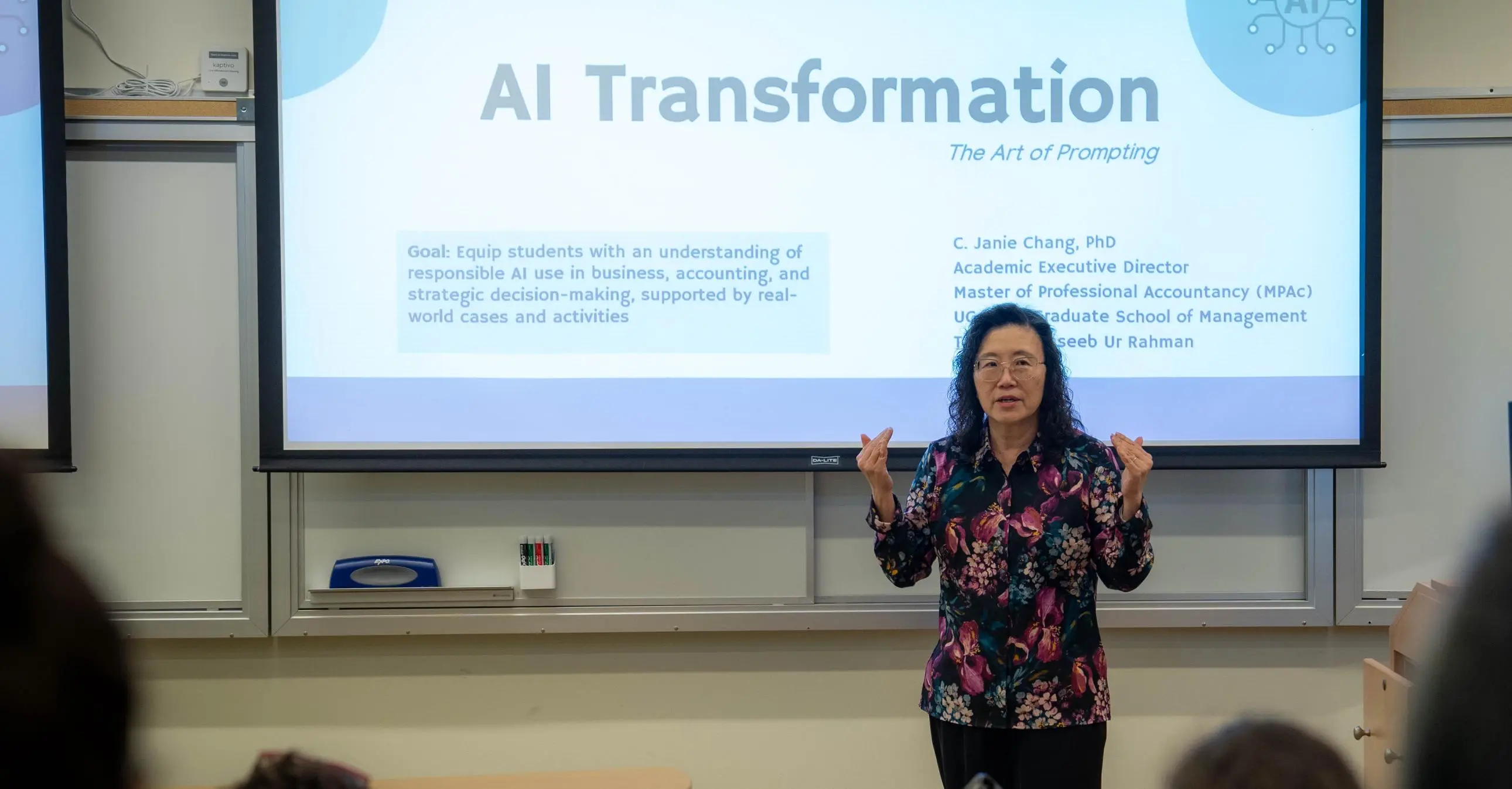
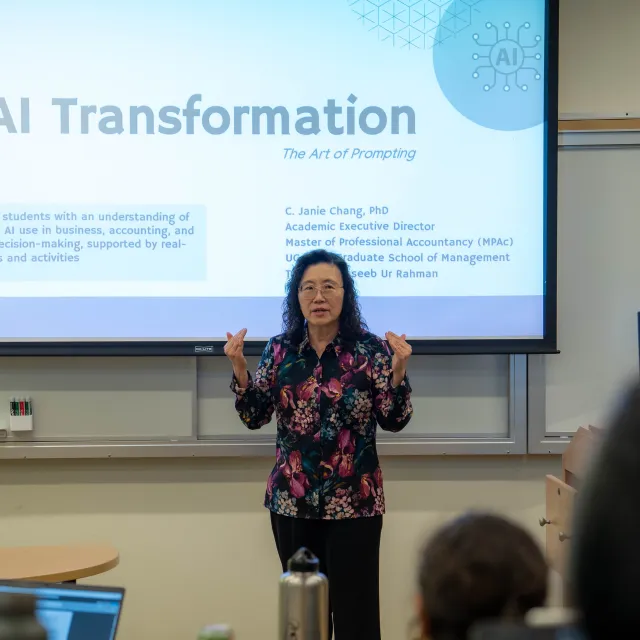
“Our goal is to equip students with an understanding of responsible AI use in business, accounting, strategic decision-making, supported by real-world cases and activities.”
— Janie Chang, Ph.D., Academic Executive Director of Master of Professional Accountancy program
Learning by Doing
In the classroom, you'll work with data, explore machine learning applications and see how AI is changing the way business problems are framed and solved. The goal is to prepare you to use AI with transparency, skepticism and accountability. The emphasis is practical:
- How to understand use of the tools.
- How to challenge assumptions.
- How to translate analysis into decisions leaders can act on.
For example, in our MPAc program, AI is introduced as a practical extension of accounting expertise, not a replacement for it. Students first build domain knowledge in accounting, audit, tax, systems, and data analytics so they can evaluate whether AI-generated outputs are accurate, relevant, and professionally sound.
In our MBA program, Assistant Professor Jörn Boehnke leads a two-day intensive residential program, AI and Business Innovation. The key topics include core methods (regression, classification, clustering); interpreting outputs and limitations; data-driven decision making; and integrating AI into workflows.
"We cover practical aspects such as prompt design, model evaluation, and integrating AI outputs into structured logistic regression workflows. The main goal is to build intuition for how machine learning and AI systems work and how to use them in business settings."
— Assistant Professor Jörn Boehnke
Laying the Groundwork for AI
To build a shared foundation, AI is woven into our orientation experience for all programs.
Our hands-on, “AI Transformation: The Art of Prompting,” workshop for incoming MBA and MPAc students introduces core AI concepts, Gen AI application and ethical use of AI with examples connected to business, management and accounting.
Students explored how AI can support professional and academic tasks such as document review, summarization, first-pass analysis, coding support, workflow assistance and course-specific learning. Through hands-on activities, the workshops emphasized responsible AI use in assignments, effective prompting, verification and transparency.
Featured Courses
As AI continues to reshape industries, business leaders must be prepared to understand, evaluate and thoughtfully apply these rapidly evolving technologies.
Our STEM-designated program curricula are designed with the skills, knowledge and perspectives students need to thrive in a rapidly evolving business environment.
AI-Infused Course Program
Faculty have launched an initiative designed to recognize courses that integrate AI into business education and reinforce our commitment to preparing students for the future of business.
Our AI-Infused Course Program identifies two types of courses that provide rigorous and sound engagement with AI.
Sample AI-Designated Courses
AI-Designated courses place artificial intelligence at the core of the course’s intellectual focus. In these courses, AI is a primary subject of study rather than a supporting topic. Students engage deeply with AI concepts, methods, tools, and implications that are central to the course learning objectives.
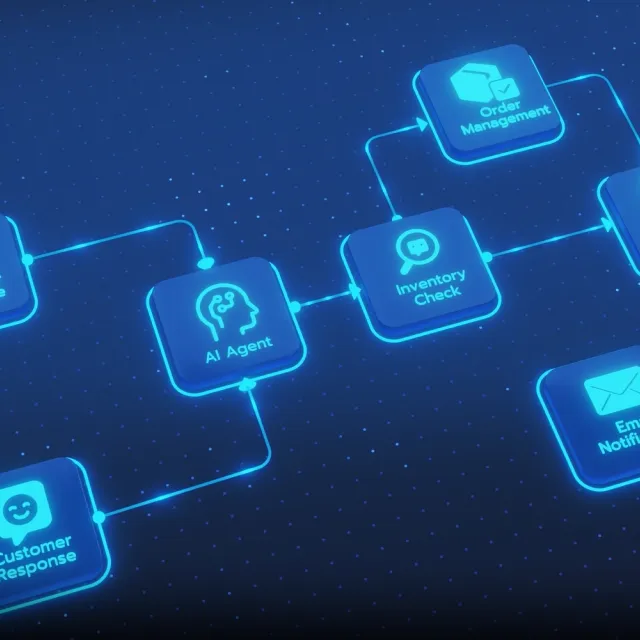
For example, the AI Agents: The Future of the Enterprise course equips students with an understanding of how AI agents handle complex workflows in enterprises.
Key topics include, but are not limited to:
- Substantive coverage of AI foundations, models, or systems relevant to business
- Managerial, strategic, or organizational decision-making centered on AI technologies
- Hands-on interaction with AI tools, data, or models as a core component of the course
- Sustained treatment of AI ethics, governance, regulation, and societal impact.
Below are just a few examples of other AI-Designated courses:
| Course Title |
|---|
| AI Agents: The Future of the Enterprise |
| AI and Business Innovation |
| AI-First Strategy & Ecosystems - Re-Thinking Digital |
| AI Transformation: Building AI-powered Business |
| Artificial Intelligence (AI) in Marketing |
| Fundamentals of Applied AI |
| Machine Learning and Artificial Intelligence |
| Machine Learning with Python |
Sample AI-Integrated Courses
AI-Integrated Courses incorporate artificial intelligence as a meaningful and intentional component of a broader course, while the primary focus remains on the disciplinary domain (e.g., strategy, finance, marketing, operations, accounting, organizational behavior, etc.). Topics include:
- Modules or cases illustrating how AI affects business practice in the field
- Assignments or exercises that use AI tools to enhance analysis or decision-making
- Discussion of AI’s opportunities, limitations, and risks within the discipline
- Consideration of ethical, legal, or governance issues related to AI use in context
In these courses, AI enhances and extends existing learning goals rather than defining them. Below are just a few examples of AI-Integrated courses:
| Course Title |
|---|
| Accounting Information and Control Systems |
| AI-Infused Marketing Management |
| Applied Business Forecasting |
| Applied Regression Analysis |
| Audit Data Analytics |
| Digital Content Creation: Video, Copywriting, and AI Agents |
| Introduction to FinTech |
| New Product Development |
| Organizational Strategy and Structure |
| Personal Branding |
| R for Business Analytics |
| Strategic Branding |
| Strategic Change: Organizational Design for Disruption |
Related Content
KPMG Brings AI Tax Practice to UC Davis

Beyond ChatGPT: A Professor-Built AI for Business School