Our Road to the Big Bang! Finals: Building AI-Powered AgTech Focused on Cattle Health
UC Davis MSBA project plants seed to solve $2B dairy cow industry drain
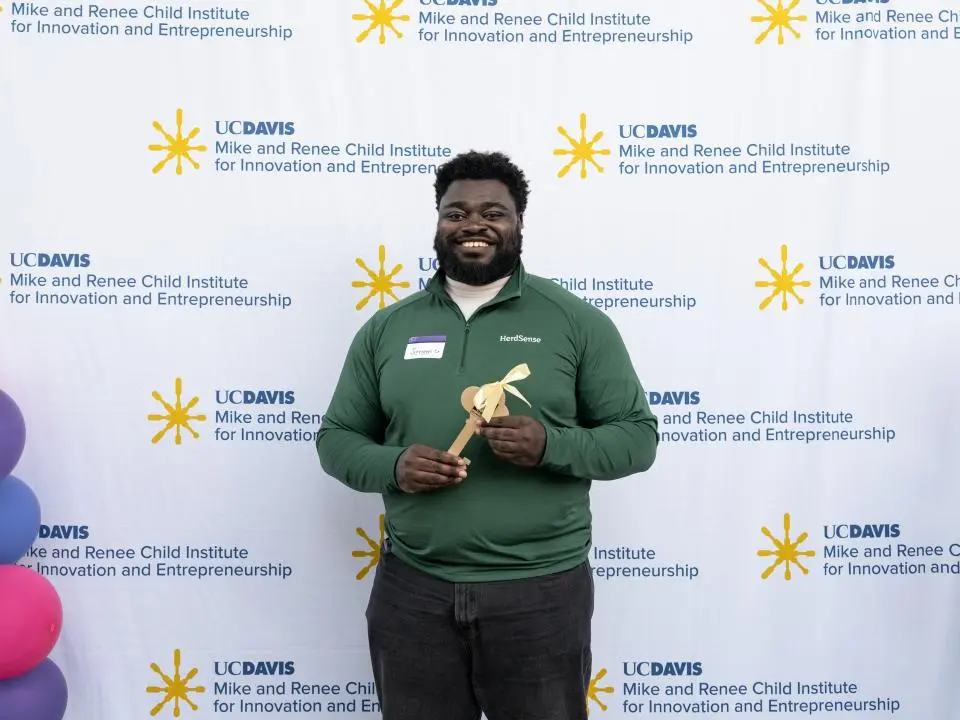
You could say we’re “milking” the opportunities from our UC Davis experience and you would be spot on.
The Master of Science in Business Analytics program in San Francisco has opened many doors and introduced me to a whole new world of possibilities.
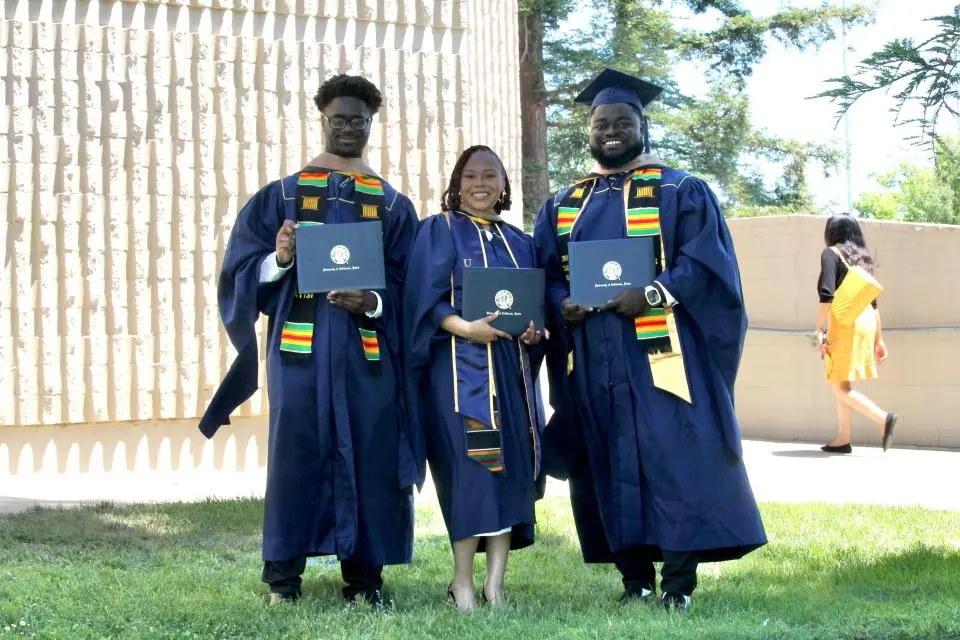
It’s where I met my classmates, Kyle Ayisi and Jovoney Williams, who I joined forces with to form Pivot Group, a multidisciplinary innovation studio creating value at the intersection of our expertise in tech, media and strategy.
Our first product in beta is Habituals, which acts like a personal rhythm coach to create habits that stick to keep your mind, body and soul in sync.
HerdSense: Every Cow Deserves More Than a Head Count
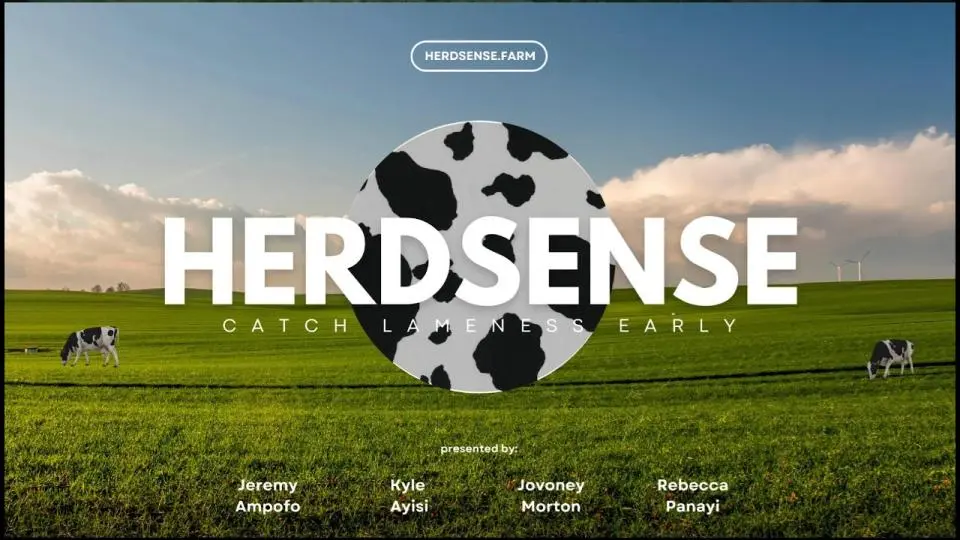
Since graduating from the MSBA program last year, we worked for several long months to launch a new product, HerdSense. The AI-powered monitoring system spots dairy cow lameness early before it impacts farmers’ cost by protecting their herd, margins and milk production. HerdSense mounts on existing chutes and alleys. No wearables, no ear sensors, just cameras that quietly score every cow, every time she walks by.
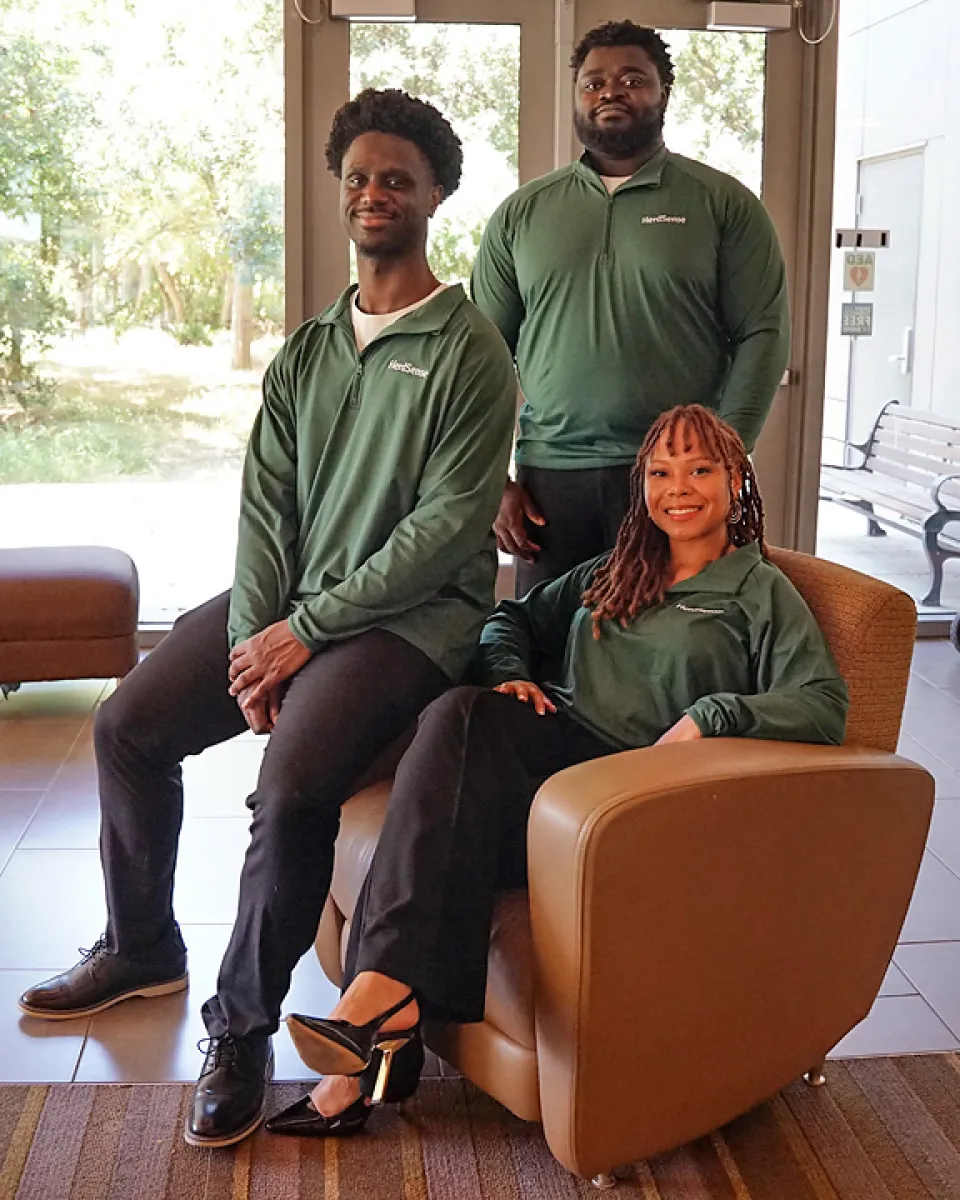
We've added a new member to the team, Rebecca Panayi, a veterinarian specializing in cattle who will give us greater insight into how to operate within the animal space. We will look to bolster our ranks further with more farm and veterinary experience on this venture.
We are innovating at the intersection of machine learning and AI integrated with cutting-edge, ruggedized hardware to eliminate subclinical lameness in dairy cattle. We believe that other agtech companies in this space aren't taking full advantage of the rich multimodal capabilities of AI.
It’s a big problem without an effective solution: Cattle lameness drains $2 billion annually from U.S. dairies mainly because three out of four cases are missed by the naked eye.
Benefitting from the Big Bang!
We are fortunate to have the support of advisors and veteran entrepreneurs from the UC Davis Institute for Innovation and Entrepreneurship guiding us and strong oversight from our mentors UC Davis Graduate School of Management Marketing Professor Prasad Naik and Catalina Cabrera. We believe we are the right team to bring this technology to market.
We were thrilled to win a Residency Award at the Institute’s 2026 UC Davis Big Bang! Business Competition finals, which recognized seven teams from a field of more than 90 entries.
Our award came courtesy of UC Davis MBA alumnus and successful entrepreneur Tim Keller, the founder of Inventopia, a Davis-based engineering and life sciences incubator. Thanks to him, we now have space to test out our early prototype, and plan to roll out to pilot farms by late 2026, early 2027.
The road to the Big Bang! Business Competition finals and the launch of Pivot Group and HerdSense began during our coursework in the MSBA program.
The Trigger: My Journey Hopping the Pond to UC Davis
I was on a rotational placement at Allianz in London, actuarial exemptions under my belt, when AI started showing up in every conversation at the office and in my personal life. In late 2022, the noise around "ChatGPT" grew simply too loud to ignore. None of it was in the syllabus I had spent four years on at Kent, and honestly, the insurance industry has not caught up even now.
Looking at it now, the bet seems obvious. Personal automation agents are running tool calls, GPT-5.5 on the horizon, Claude Opus 4.6 in production, trillion-parameter models, billions in revenue, trillions in valuation. At the time it was nothing of the sort.
When I applied to the UC Davis MSBA, AI was still, by most accounts, a gimmick. I made the move across the globe to the heart of San Francisco, a stone's throw from the Salesforce Tower. I wanted to be inside the change, in the city where OpenAI, Anthropic and Google are moving at a pace nobody—not regulation, not industry, not even research—could keep up with.
The Reality Check
I expected two versions of the MSBA program and, looking back, I think both guesses were wrong for the same reason.
The first was that AI tools would be quietly banned, the way calculators were policed in early exams I sat.
The second was that they would be treated as a crutch, something to caveat against, not teach. Both assumed AI was optional. In my opinion, programs taking either position set their graduates up to struggle.
The GSM did neither. Over my time in the MSBA program, we watched GPT-4, GPT-4o, and Opus-class models arrived at what felt like monthly intervals, and my definition of "AI fluency" changed twice.
At the time, I thought it meant prompt engineering. That view was out of date before I even graduated. Fluency now, to me, is being able to explain why a team would reach for a CNN (Convolutional Neural Networks) rather than an LLM (Large Language Model)—or, maybe controversially, when simple deterministic code works best.
I can attribute the wealth of my AI education to two classes. Machine Learning mapped the theory. Analytical Decision Making with Professor Olivier Rubel is the class I think will age the best because it treated AI as a tool you use in a professional workplace, not only a topic you study. Both fed into our year-long MSBA Practicum project with San Francisco Fire Credit Union, where I integrated Cursor with my manager's encouragement and wrote over a thousand lines of SQL and Python.
The Inflection Point
Around the GPT-4o release, during our Data Management course, I built a learning tool that rewrote my study workflow. That was the moment AI stopped being a topic and started being a skill I would keep using long after school ended.
The class that turned that instinct into a company was Big Data with Assistant Professor Pantelis Loupos. He ran the course at a technical depth rare in business programs, covering not only what the models are, but how they are trained, including reinforcement learning and the efficiencies of pre-training and why different industries have need for different architectures.
These are things that can be learned through a Google search, but having someone to bounce ideas off with lived experience in the field is invaluable.
The project I ran for his class became the seed for the Pivot Group and later HerdSense.
It is also helping me today in my other “full-time” job as a research data specialist at California’s Department of Resources Recycling and Recovery (CalRecycle), where I am contributing to bring together the state’s recycling and waste management programs to move the state towards a circular economy.
My Advice for Prospective MSBA Students
Students who thrive in the MSBA program are those willing to do the work. You learn to get used to being pushed to breaking point: long days in class, longer hours on assignments and more reading than I expected.
That intensity is the price of admission, not a flaw in the design. What makes it bearable is also what makes it worth it: world-class faculty, strong facilities, industry alumni keeping the curriculum current, and a seat in the region currently deciding what AI looks like in practice.
Related content
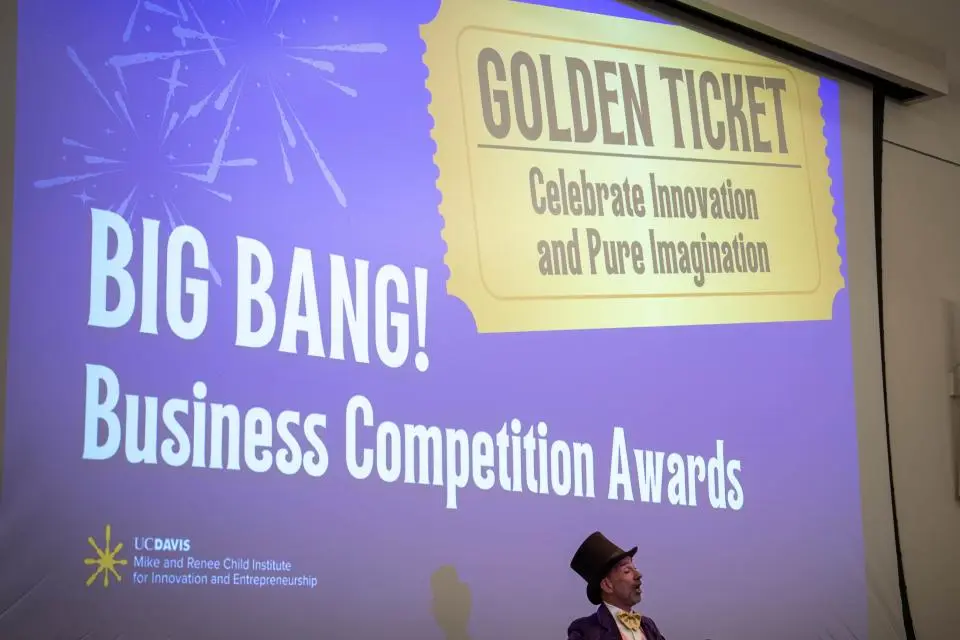
26th Annual Big Bang! Awards Nearly $100,000 in Prizes to California-based Teams
Team of Master of Science in Business Analytics grads win Residency Award
From Classmates to Co-Founders: How We Turned Group Projects into a Startup
"We noticed how naturally our strengths balanced out"
Improving Digital Experiences for Leading Bay Area Credit Union
How our team automated data collection to improve decision-making