Navigating from Big Four Accounting to Wine Industry Finance
Using technical accounting skills to move into investment banking and advisory
I like to compare career planning to navigating a ship to harbor.
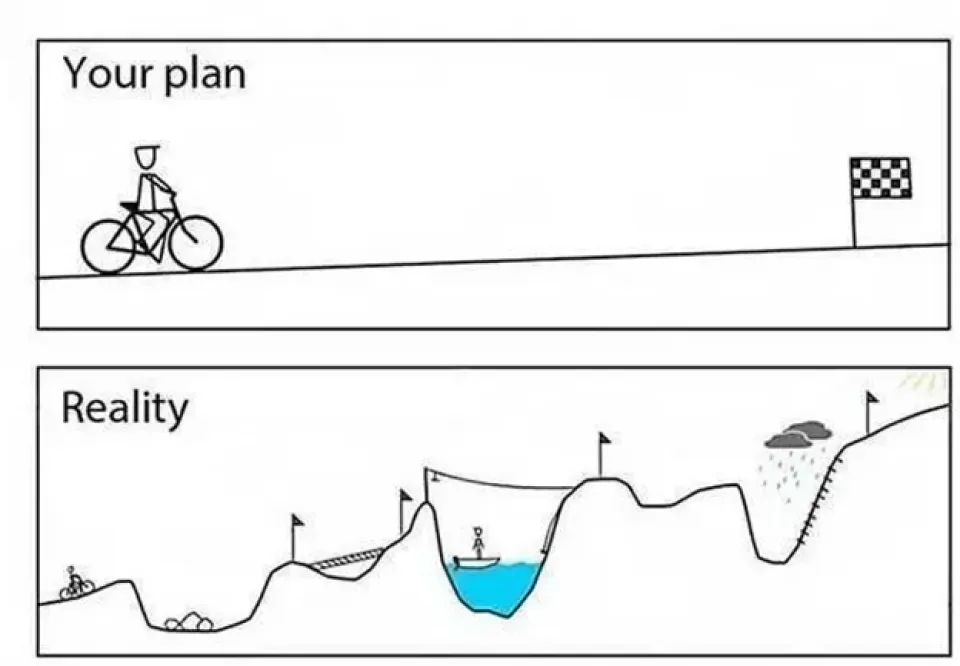
You should always try to point your ship in the right general direction, even when you cannot see the exact destination. While it’s critical to set detailed goals and visualize the outcome, it’s impossible to see directly into the future.
Unexpected moments appear in everybody’s career. In the moment, they might feel like setbacks. However, it’s these moments that provide clarity and recalibration to our true path. I often think of what Steve Jobs said: "You can only connect the dots looking back."
My career aspirations started in second grade. Yes, you read that correctly.
As the son of a CPA in the wine industry, I knew I wanted to follow in my father’s footsteps at around seven-years-old and even wrote it as my “dream job” while the other kids would write firefighter, president or doctor. I’m sure the teacher got a kick out of that one!
Still, after I finished my undergraduate degree at Chico State, I had far from a perfectly defined career plan. I interviewed for a variety of analyst roles and cast a wide net. Those interviews actually revealed what I did not want, which I would argue is equally as, if not more, important than knowing what you do want. It was then clear to me that starting my career within the accounting industry, specifically the Big Four, would be my pursuit.
The UC Davis Master of Professional Accountancy program became the first real milestone in that journey.
Why the UC Davis MPAc Became My First Career Stepping Stone
My initial attraction to the program was out of necessity. My undergraduate coursework did not meet California’s licensure requirement to sit for the CPA exam, as many students have also encountered. The MPAc program provided the pathway I needed.
I was fortunate to complete an audit internship at PwC in San Francisco prior to starting the MPAc. At the time, it was standard for interns to join without their CPA, but earning the certification was required to advance at the firm.
That meant two options:
- Earn an online certificate.
- Earn a master’s degree.
To compete at the highest level, I knew a master’s degree was the only choice. Thus began my research on graduate accounting programs. The UC Davis MPAc stood out as the clear choice immediately.
From my first point of contact with the program directors, to meeting the staff and faculty, it was obvious that the UC Davis MPAc was top-tier.
One of the first things that stood out to me was the diversity of backgrounds in my cohort. Some students brought strong technical accounting experience, while others came from entirely different majors. We had people from across the country and around the world.
Everyone arrived along a different path, but we were all figuring things out together.
You don’t need the exact coordinates of your career. You just need to know that your ship is headed in the right direction.
Building Technical Accounting Skills That Translate to Real Business
Academically, the UC Davis MPAc program built a strong technical foundation. Classes were rigorous and closely connected to the CPA exam. This made the bridge to studying and taking the exams very seamless.
One class that still stands out was with then-Executive Director Will Snyder, who has since retired. “Professor Will” as students knew him, had an uncanny ability to connect technical accounting concepts to real-world business situations, making the material feel practical rather than abstract.
The MPAc coursework pushed us to think beyond memorizing rules and instead understand how accounting decisions affect businesses, investors and strategy.
At the same time, the program reinforced something that becomes clear very quickly in professional accounting: Technical skills alone are not enough.
Everyone in the MPAc program is capable of mastering the material. What often differentiates people in interviews is organization, judgment and interpersonal skills.
From Accounting Foundations to Wine Industry Finance
After UC Davis, I began my career at PwC in San Francisco in the Asset Management group. Our client at the time was one of the largest financial institutions in the world and a top revenue-generating client for the firm. The pressure to perform was on!
The experience gave me exposure to fund accounting, financial instruments and the mechanics of large financial organizations. It was an incredible foundation early in my career.
After a few years working with that client, I got my sea legs and began to ask questions about my preferences and direction. That led me to explore opportunities within the firm’s private client group, which exposed me to the wine industry and M&A within the wine and beverage category. My curiosity took me further to Deloitte’s consulting practice in New York City, where I sharpened my M&A skills, but I eventually knew that my calling was within the wine industry.
If something isn’t aligning with your long-term interests, you have to believe in yourself enough to change course. Do not concern yourself with other’s opinions—only you know what is right for you.
Looking back, the path was far from linear. It is absolutely a prerequisite to be very good at your “craft” and have a fundamental understanding from a technical standpoint in order to pursue different paths. UC Davis gave me the technical foundation necessary and helped me navigate each step along the way.
How My MPAc Classmates Helped Me Pass the CPA
One of the biggest lessons from the MPAc program was the importance of relationships.
Some of my best memories from that year involve studying with classmates late into the night in Gallagher Hall. We would set up in a room, put a game on the projector and work through CPA exam material together on the whiteboard.
Studying together made an intimidating process feel manageable.
The people in your cohort become part of your professional network for the rest of your career.
Advice for Future UC Davis MPAc Students
My advice to students entering the program today is simple.
Take risks. Get involved. Talk to professors outside the classroom. Stay connected with your classmates. And do not panic if your career path does not look perfectly clear yet.
Most successful careers are not straight lines.
They are ships moving steadily toward a destination you can only fully see once you get there!
Related content

California’s New CPA Licensure Requirements: Addressing the Workforce Shortage
Fast-track your CPA journey with UC Davis MPAc