From Self-Doubt to CEO: My MBA Changed My Life as a Leader
What the UC Davis MBA taught me about trust, confidence and executive accountability
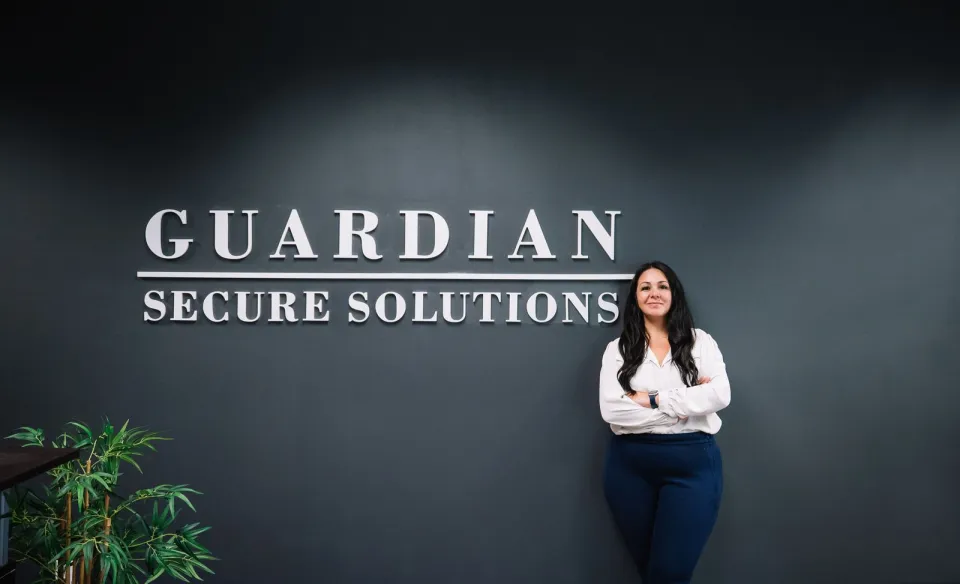
I didn’t expect a parking lot conversation to change how I saw my career.
During a routine client visit early in my career, I approached two individuals attempting to enter a property under my company’s contract, Guardian Protection Force. When I introduced myself, one of them questioned my role outright and told me, confidently, that women didn’t hold positions like mine.
I handled the situation professionally. It resolved quickly. But the moment stayed with me.
Not because of what he said, but because part of me believed it.
I Had the Experience. I Didn't Trust It.
At that point, I had already built a foundation in the security industry, starting in loss prevention and moving into human resources and team leadership. I understood the business, but I didn’t always feel confident leading in a room full of professionals with military or law enforcement backgrounds.
That disconnect is what pushed me to pursue my MBA at the UC Davis Graduate School of Management.
I didn’t need more experience. I needed the confidence to trust it. My decision to pursue a UC Davis MBA was not about changing careers. It was about strengthening my ability to lead within the ability I had already built.
The Reality of the MBA Experience

The UC Davis Sacramento Part-Time MBA required more discipline than I anticipated. Balancing full-time work with multiple courses meant constantly shifting between different ways of thinking. Some subjects aligned with my strengths, while others, especially accounting, challenged me in ways I hadn’t experienced before.
What made the difference was the cohort.
I was surrounded by professionals from a wide range of backgrounds, including engineers, analysts, operators and entrepreneurs. Everyone brought a different lens to the same problem.
That diversity changed how I learned.
Group work became less about dividing tasks and more about integrating perspectives. I relied on others in areas where I lacked experience, and they relied on me for leadership, communication and decision-making.
The program works because no one has the same strengths. You learn faster because you don’t have to do it alone.
Learning Through the UC Davis Network, Not Just Coursework
One of the most influential experiences during the program was a course taught by Lecturer Jim Wunderman.
His class focused on the intersection of business, leadership and relationships. He brought in senior executives from major organizations to speak directly with students, not as guest lecturers, but as part of an ongoing network he had built over years.
What stood out was access.
These were high-level leaders with demanding schedules, yet they showed up, shared openly and offered their contact information. That only happens when relationships are real.
Watching that dynamic changed how I think about leadership.
The biggest lesson wasn’t in the class syllabus. It was watching how relationships open doors.
Applying the MBA in Real Time
While I was a student, I transitioned into an operations role. This shift required managing budgets, overseeing logistics and making decisions that directly impacted business performance.
The MBA became immediately practical.
Concepts from finance and accounting moved from theory to application. I began to understand how decisions affected not just people, but the financial health of the organization. I could evaluate trade-offs, anticipate challenges and make more informed decisions.
At the same time, leadership became more complex.
Leadership is hard. It requires making decisions that not everyone agrees with, holding boundaries and balancing empathy with accountability.
The MBA was hard in a similar way.
It pushed me outside my comfort zone, forced me to think differently and required consistent effort across areas where I did not naturally excel.
Leadership is hard. My MBA was hard. Finishing it proved I could handle both.
That realization carried forward into my career. If I could navigate the demands of the program while working full time, I could step into larger leadership responsibilities with confidence.
A Different Way to Approach Leadership
Before the MBA, I often measured my leadership against what I lacked. After completing the program, that perspective changed.
I stopped focusing on whether I had all the answers and started focusing on how to find them.
The program provided a broad understanding across disciplines, but more importantly, it built confidence. Confidence to step into new roles, to ask better questions and to lead without second-guessing my background.
Today, as a CEO leading a security organization, that shift continues to shape how I approach my work. Whether evaluating industry changes like AI integration or managing complex operations, I rely on the foundation built during that time.
I was recently featured in Comstock’s Magazine Women in Leadership issue, which highlighted my work building a tech-driven approach to security and leading in a male-dominated industry.
What Prospective Students Should Consider
If you are considering a graduate business degree, treat the decision like your first assignment and define your return on investment.
Not just financially, but in terms of time, energy and long-term career direction. What are you hoping to gain? Where do you want it to take you? That clarity matters.
For me, the investment paid off. The UC Davis MBA strengthened my ability to lead, expanded how I understand business and connected me to a network that continues to support me today.
The expectations were clear going in, and the outcomes matched them.
More importantly, it changed how I see myself as a leader.
I no longer question whether I belong in the room. I focus on the impact I can make once I’m there.

Related content
From Software Novice to MBA Leader: How an MBA Enhanced My Network
Leadership cultivated beyond the classroom