Putting Out Fires: A Leadership Lesson from Porsche's Test Track
How the UC Davis MBA Doing Business in Europe study trip changed the way I approach problems and decisions
“Fire! The front brake is on fire!”
My classmates and I were on the test track at the Porsche Experience Center in Leipzig, Germany, waiting for a wild ride in a Porsche 911 GT3. We were shouting because we didn’t expect to see flames shooting from the front wheel.
A couple of Porsche technicians took a look, shrugged and sent the car back out on the track. We learned the carbon-ceramic brakes are engineered for thermal stress; simply running the car extinguished the flames.
As an Online MBA student at the UC Davis Graduate School of Management, I applied for the Doing Business in Europe program, as part of the International Exchange Program, to see real-world applications of market dynamics in a new environment. I wasn’t disappointed.
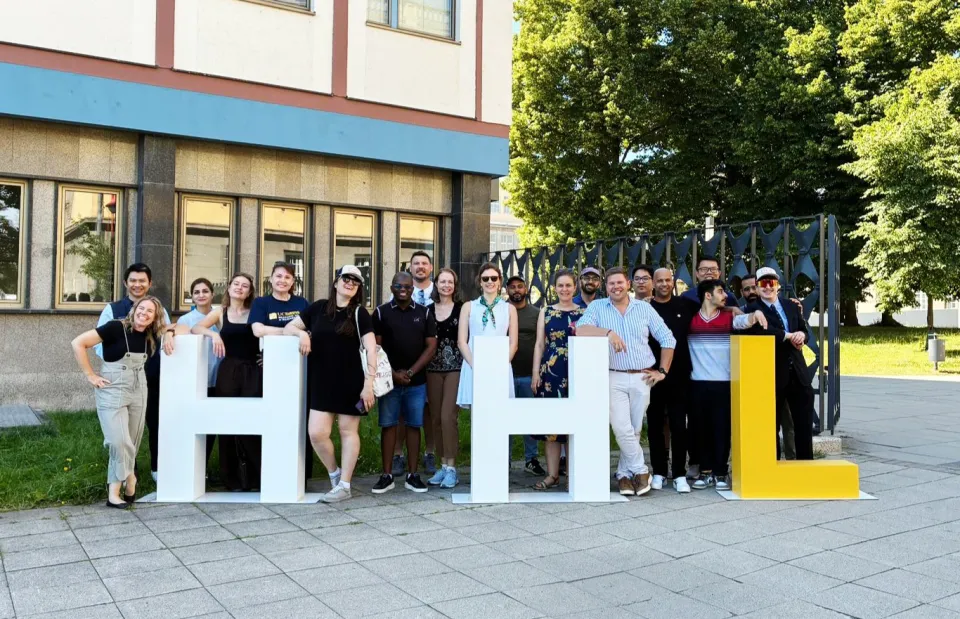
Our days were split between lectures at HHL Leipzig Graduate School of Management and the Prague University of Economics and Business, paired with hands-on company visits. We weren’t just tourists, we were actively learning how to lead, adapt, and be open-minded.
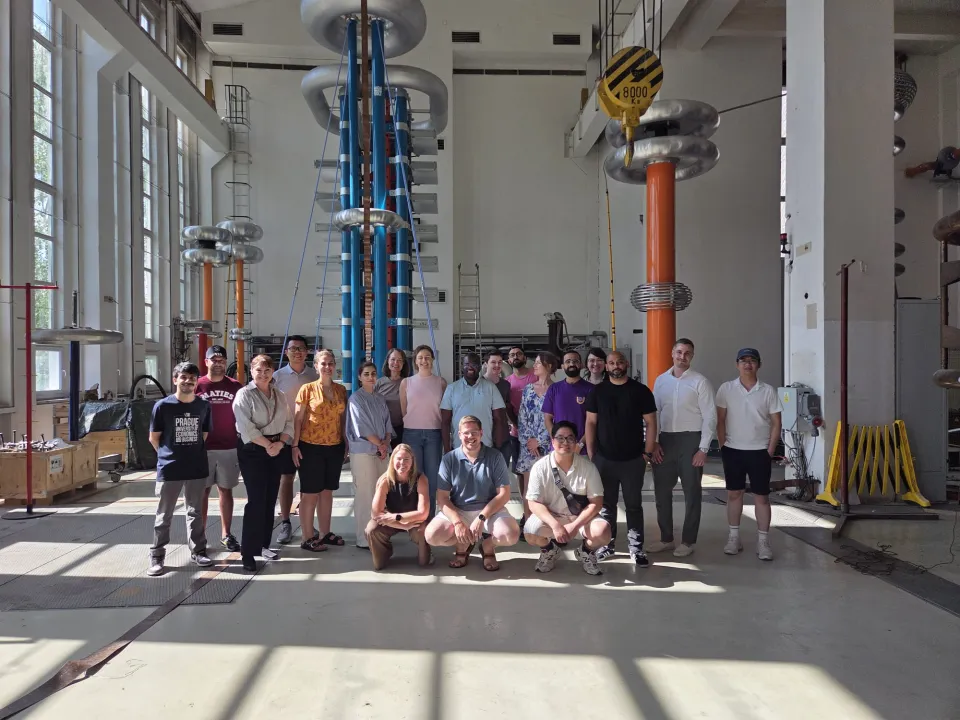
Classroom Theory Meets Real-World Infrastructure
The greatest academic value of this trip was watching industry-leading organizations navigate systemic challenges in real-time. We saw first-hand the balancing act Germany faces: Powering the world’s third-largest export engine while shifting aggressively toward 50 percent renewable energy sources, all while continuing to engineer solutions to cope with dunkelflaute, or the “dark calm” when wind and solar power are both unavailable.
We analyzed solutions to this infrastructure puzzle through two distinct corporate lenses: At Energy2market (e2m) in Leipzig, we explored how an independent aggregator uses proprietary software platforms to balance the power grid.
As an MBA student focusing on food and agriculture, I was surprised to learn how e2m coordinates with local farmers who ferment organic waste into methane-rich biogas. In the Czech Republic, we visited the EGU-HV Laboratory and learned how engineers stress-test high-voltage power grid equipment to prevent catastrophic blackouts. We even witnessed a spectacular, controlled lightning strike that captivated our group!
The corporate visits broadened my understanding of operational integration.
At the Porsche AG factory, we watched huge KUKA robotic arms apply adhesive and install windshields with surgical precision. The real lesson wasn't simply the automation, it was the harmony created by humans and robots working together. Once the machines finished the heavy lifting, human engineers stepped in to ensure quality and manage global market variations.
The Real Power of the Global Cohort
While the company visits provided the framework, my peers offered the perspective. I traveled in a tight-knit cohort of 19 international MBA students from the United States, Canada, England, China, South Africa, and Czech Republic, bringing together diverse professional backgrounds from all over the world.
Some of our most enlightening conversations didn’t happen in a lecture hall, they took place in everyday moments. While waiting for our clothes to dry in a cramped basement laundromat in Prague, Czech Republic, my South African classmates and I compared global worker protections, graduate school models, and cultural variations.
Together we navigated light rail schedules in foreign languages, shopped for antique pottery, and made sure everyone stayed healthy during a heat wave. Our experiences transformed us from mere classmates into an international network of collaborators and friends.
Before leaving California, I put logistics, agricultural networks, monetary policy and cultural histories into separate academic buckets. I returned home realizing they are interconnected pillars of global economics.
The Ultimate ROI
If you’re wondering if a global study trip is worth the investment of time and money, the answer is absolutely yes. I would do it again in a heartbeat.
This experience forces you to throw away your preconceived notions. Before leaving California, I placed supply chains, agricultural operations and macro strategy into academic silos. My trip to Europe taught me they are interdependent pillars of global business operations.
My advice to future students? Submit your application as soon as it's available. Lean into the discomfort of those unfamiliar environments, ask the foundational "why" questions of experts you meet, and remember that real networking happens during the unstructured moments between classes. This program successfully transforms you from a traditional graduate student into a globally-minded manager ready to handle real challenges.
Snapshots from Europe
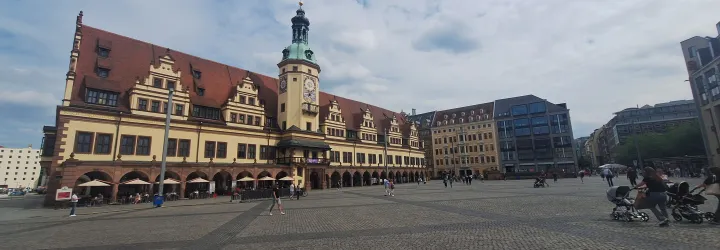
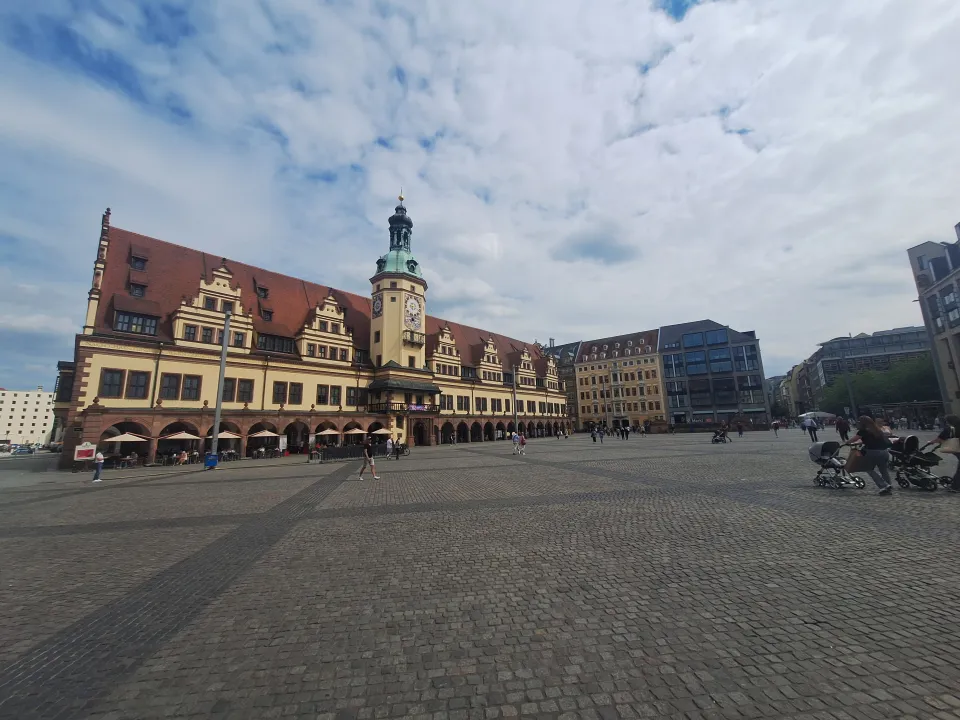
Leipzig’s historic market square showcases the city’s blend of tradition and innovation, reflecting the region’s evolution as a center for business and industry.
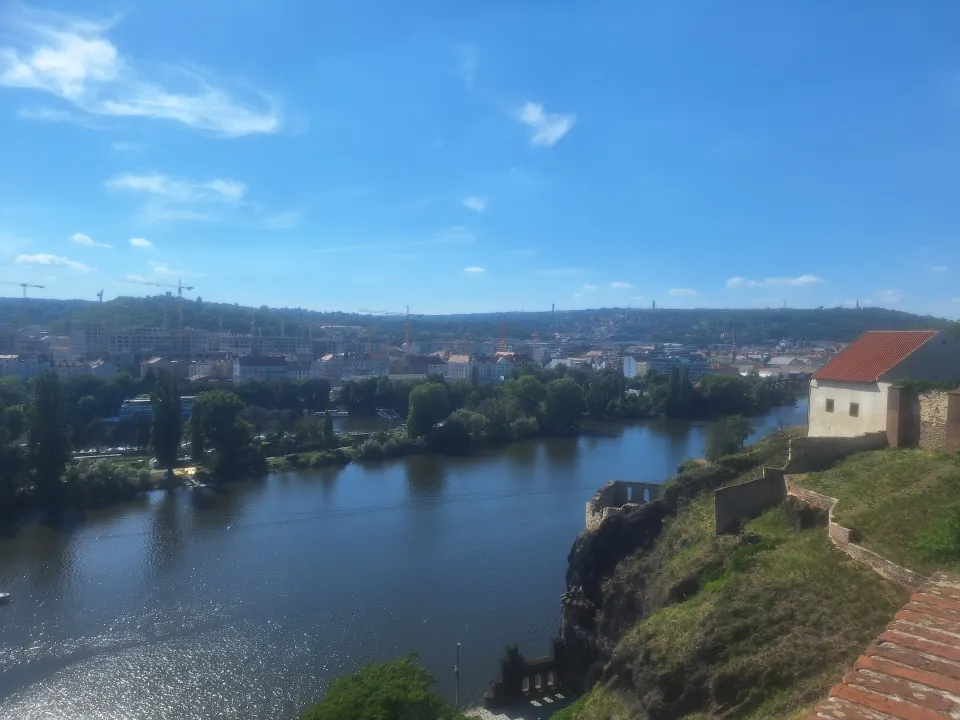
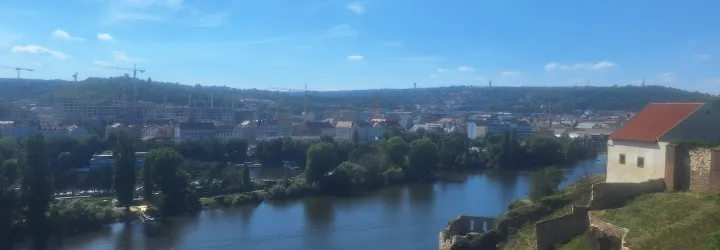
The Vltava River provides a view of Prague’s historic landscape, where UC Davis MBA students explored the connections between culture, economics and global business.
Related content
Discovering Finland Bookends My UC Davis MBA
Two-week international immersion offers a lifetime of benefits
The Sisterhood of the Traveling MBAs: Our Journey Through Chile
Connecting with industry leaders in real estate, land development, banking, and sustainable agriculture