AI in Accounting: Would You Catch the Mistake?
UC Davis MPAc research reveals why expertise matters for future CPAs
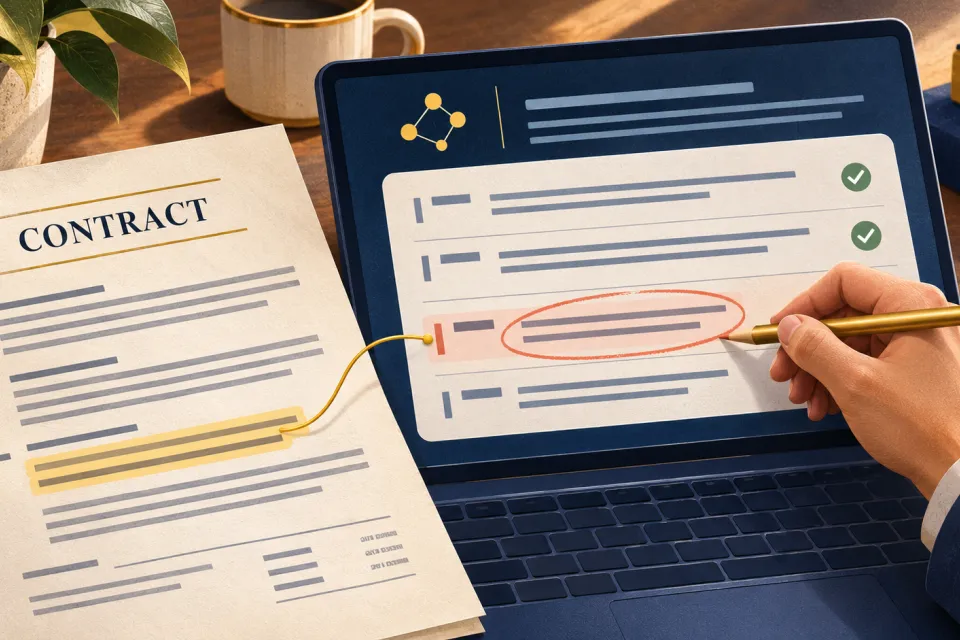
If you are working toward a CPA license, you may wonder whether the hours you spend mastering lease accounting and revenue recognition will still pay off when AI can read a contract in seconds.
C. Janie Chang, academic executive director of the UC Davis Master of Professional Accountancy program, and I tested what accounting expertise adds when AI does that reading. In our research published in Accounting Horizons, we found that expertise made a critical difference in whether AI improved accuracy or introduced errors. Simply having someone review AI’s answers was not enough. The reviewer needed to understand the accounting standards and recognize when a convincing response was wrong.
For future CPAs, the message is encouraging: The knowledge you are building matters more with AI, not less. Understanding how to evaluate AI’s work can be as valuable as knowing how to use it.
The future of AI-assisted accounting depends on people who understand what a correct answer requires.
Why AI in Accounting Needs Expert Review
Contracts help determine how businesses borrow money, account for leases and recognize revenue. They can also be long, technical and full of references to other sections. In one credit agreement we analyzed, answering a single question about a debt covenant meant tracing five provisions spread across 74 pages.
We examined nine workflows for extracting accounting information from debt, lease and sales contracts filed with the SEC, varying the use of human verification and the verifier’s accounting knowledge. The work drew on ASC 842 (leases) and ASC 606 (revenue from contracts with customers). Lessee accounting and revenue recognition are both tested in the FAR section of the CPA exam.
Our debt contract comparison illustrates why the verifier’s expertise matters:
| Workflow | Accuracy | AI cost per contract |
| AI without a human verification loop | 80% | $0.64 |
| AI with a verifier lacking accounting expertise | 50% | $0.74 |
| AI with an accountant-guided verification loop | 90% | $0.08 |
The two verifiers took opposite approaches. While trying to fix the AI’s errors, the verifier without accounting training expanded the AI’s instructions from about 2,000 words to nearly 5,000, and accuracy fell. The accountant applied accounting judgment to cut the instructions to 750 words. Accuracy rose, and the AI cost per contract fell to roughly one-tenth of the nonaccountant’s.
Simply putting a person in the process was not enough. That person needed the knowledge to recognize mistakes.
As the accountant refined the process, the workflows for debt, lease and sales contracts each reached 100% accuracy on new samples of contracts not used in earlier rounds. That result does not mean AI becomes infallible. It shows what careful verification and deep subject knowledge can accomplish in a defined task. Each test sample held only 10 contracts, and results depend on the AI models available at the time.
The Mistakes Only an Accountant Would Catch
What made expertise so decisive? The AI’s errors looked like correct answers. Each was plausible on its face and detectable only by someone who knew what the right answer looked like. Several involved topics you may be studying right now.
A fabricated citation. In one lease analysis, AI cited a paragraph of the FASB Accounting Standards Codification as its authority for how to treat variable lease payments.
The citation looked credible, matching the Codification’s numbering format and pointing to an area where a related provision does exist. But its content was fabricated. When challenged, the AI conceded it could not verify the paragraph existed. An expert caught the problem and supplied the actual standards text.
A misapplied exception. ASC 842 keeps certain variable payments out of the lease liability, and AI misjudged how narrow that exception is. In one lease, annual rent was scheduled to rise from $655,200 to $763,077, and AI labeled the increase a variable payment.
The amounts were set in advance, so they are fixed payments that belong in the lease liability. AI also treated the tenant’s share of the landlord’s operating expenses, property taxes and insurance as variable lease payments. ASC 842 treats these as payments for services or pass-through charges, not payments for the use of the leased asset.
Confidence without evidence. For sales contracts analyzed under ASC 606, we gave three widely used AI models identical instructions and identical contracts.
One reported no bundled equipment and service in an agreement where the other two identified them. Another failed to recognize a milestone payment schedule as variable consideration. Some models also reported high confidence without quoting the contract language behind their conclusions.
A reviewer without accounting training could easily have accepted each of these answers. Catching them required knowing which rules apply, how exceptions work and whether the evidence supports a conclusion.
Four Skills to Build on Your Way to a CPA License
As you prepare for the CPA exam and the career that follows, focus on four priorities:
1. Build your technical foundation. You need to understand the accounting standards before you can assess whether AI applies them correctly. AI can deepen your understanding as you correct its errors, but only if you know enough to spot them.
2. Ask for evidence. A confident answer should lead you back to the contract language and authoritative sources. Our workflows required AI to quote the supporting contract language word for word, so every answer could be checked against the source.
3. Give AI focused instructions. More words did not produce better results in our study. AI can overlook details buried in the middle of long instructions. Knowing which rules matter lets you tell AI precisely what to look for.
4. Practice explaining your reasoning. Identifying an error is only part of the work. You also need to explain why it is wrong and how to correct it. When you work practice questions, go beyond the right answer and explain why each tempting wrong answer fails.
Why This Matters for Future CPAs
AI now lets accountants automate work with plain-language instructions instead of code, so building the tool is no longer the hard part. The hard part is telling a plausible answer from a correct one when the output carries legal, regulatory and fiduciary consequences. That judgment comes from accounting training, which is exactly what you are building now.
Working with AI also seems to get easier with practice. The accountant in our study needed three rounds of refinement for debt contracts, two for leases and only one for sales contracts, even though sales contracts demanded the most judgment. The pattern suggests that skill in working with AI carries over from one task to the next when the accounting foundation is in place.
At the UC Davis Graduate School of Management, you can learn from MPAc faculty members whose research examines how AI is changing accounting and the expertise professionals need to use it effectively. If graduate study is part of your path to licensure, consider who will help you build the knowledge and judgment to stay relevant in the ever-changing AI workplace.
Related content

Domain Knowledge and Human-AI Collaboration: Extracting Accounting Information from Contracts
UC Davis MPAc faculty experts explore the human advantage

Innovation Isn’t Just About Technology. It’s Also About Accounting.
Japan's pre-2000 R&D accounting environment reveals consequences for innovative output

Introducing Ayung Tseng: Enriching UC Davis with a Passion for Research
Bringing her expertise and vision to MPAc