UC Davis Hosts 2026 Davis Conference on Qualitative Research, Advancing Field-Shaping Scholarship
Thought leaders accelerate ideas into solutions at 26th annual conference
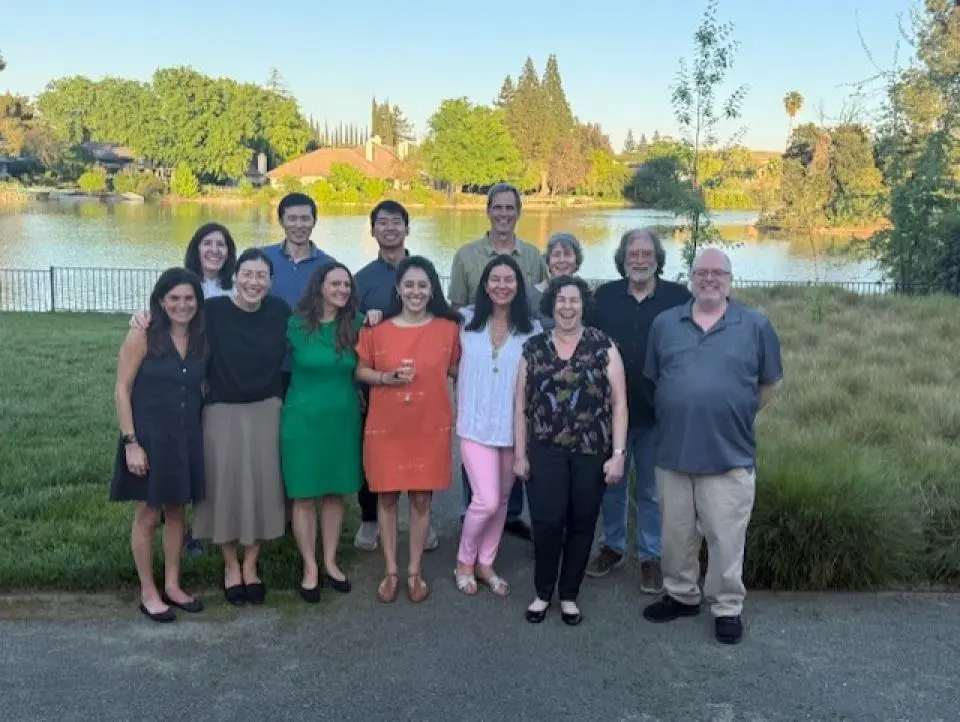
The UC Davis Graduate School of Management brought together some of the most influential voices in qualitative research for the 2026 Davis Conference on Qualitative Research (DQRC), reinforcing its position as a global hub for rigorous, field-defining scholarship.
This year marked the 26th year of the academic conference. It's considered the premier event of the year for qualitative researchers in management, reflecting the strength of our organizational behavior faculty group here at the Graduate School of Management.
Held March 20–22 in Davis, this year's conference convened leading scholars from institutions including Yale University, Harvard University, Columbia University and INSEAD, to present research tackling complex questions at the intersection of work, markets and society.
From “Reel” Hollywood to Platform Work: Research Tackles Real-world Complexity
The program showcased the power of qualitative methods to surface nuance where quantitative approaches often fall short.
Associate Professor of Organization and Management Sharon Koppman of UC Irvine’s Paul Merage School of Business opened with research on how lived experience is translated into creative production in Hollywood screenwriters’ rooms. Koppman’s research challenges the conventional assumptions about authenticity and representation.
Assistant Professor of Organizational Behavior Laura Adler of Yale's School of Management followed with a timely analysis of work flexibility, demonstrating how temporal flexibility improves women’s ability to manage their work time, while remote work reinscribes gender inequalities in work time.
Game-changing Technology in Organizations
Other presentations examined how technology is reshaping coordination and control.
Professor Jamie Ladge, chairperson of the Management and Organization department at Boston College’s Carroll School of Management of Boston College, explored the limits of algorithmic management in platform labor.
Assistant Professor Alan Zhang of Columbia Business School introduced a new theory of “jurisdictional decoupling,” showing how service providers expand influence by distancing clients from their own work.
Research on markets and industries highlighted how incumbents and institutions adapt under pressure.
Assistant Professor Rebecca Karp of Harvard Business School demonstrated how legacy firms in China’s pearl industry leveraged livestreaming to maintain advantage over digital-native entrants.
Associate Professor of Strategy and Business Economics Mia Raynard of the University of British Columbia's Sauder School of Business showed how markets coordinate action even when stakeholders fundamentally disagree, which she terms “categorical reopening.”
The conference also provided new insights into identity and organizational life.
Assistant Professor Samantha Ortiz Casillas, an ethnographer at the NOVA School of Business and Economics, introduced “organizational autophagy,” which examines the unintended consequences of blurred work-life boundaries.
Assistant Professor of Organizational Behavior Michael Lee of INSEAD explored how organizations sustain identity beliefs despite persistent internal contradictions.
UC Davis Faculty Drive Rigorous Critique and Dialogue
What distinguishes the DQRC is its structure: every paper is paired with deep, engaged critique from leading scholars.
UC Davis GSM faculty, including Professors Andy Hargadon, Gina Dokko, Stephen Garcia, Elizabeth Pontikes and I, played a central role as discussants, pushing each project toward sharper theoretical contribution and publication-level impact.
This model transforms the conference from a showcase into a working session designed to accelerate ideas, not just present them.
Proving Ground for Emerging Scholars
For early-career researchers, the DQRC sends a clear signal: UC Davis GSM is not just participating in the evolution of qualitative research, it is helping lead it.
As organizations confront increasingly complex, human-centered challenges—from AI-driven work to cultural fragmentation—the demand for rigorous qualitative insight continues to grow. The DQRC stands at the center of that shift, building a community where ambitious ideas are tested, refined and elevated.
For scholars looking to shape the future of organizational research, Davis is where the conversation is happening.
Related content

Can You Go Home Again? New Study Looks at the Workplace Effects of Boomerangs
Professor Gina Dokko says impact of returning workers not always positive

The Digital Undertow: How Technology Quietly Reshapes Our Social Worlds*
Risks and rewards of generative AI in creative industries like film and TV
From Apple to Academia: Professor Andrew Hargadon on Innovation
Poets&Quants: UC Davis Thought Leadership Video Series