Everyone Says Personal Branding Is About You. Everyone Is Wrong.
How I teach promotion-free personal branding at UC Davis—and why it’s the most important career skill in the age of AI

I was tired of watching my students become invisible.
At the UC Davis Graduate School of Management, we prepare some of the most talented students in the world for top spots in industry. But something had quietly shifted. Excellence used to be the differentiator. Now it's the baseline.
In an age where AI compresses competence into a commodity, students don't just need to be exceptional, they need to be memorable, in person and online, in ways that rise above an ever-noisier sea of sameness.
In 2022, I designed what is believed to be one of the only for-credit personal branding courses in any MBA program in the country. It was not because I wanted to teach students to post more on Instagram. I wanted to do it because I knew something that seems to be overlooked: distinction is not a magic thing you’re born with or not. It can be taught. It’s done in corporate branding all the time.
So I threw out the influencer playbook and taught personal branding the way it actually works, like a mini corporate brand, built on a service-first foundation, with a streamlined digital strategy that creates a pull effect.
If Fortune 500 brands can do it, so can you. And you don’t even need a lizard to sell your car insurance, or a bunny to sell your batteries. You are a human with distinction already built in. Go, you!
The Real Point of Personal Branding (Most People Have It Backwards)
Here’s the premise that changes everything:
Your potential audience is your customer. Teach them something of value, and they will trust and remember you.
That trust drives memorability. Memorability drives referrals, repeat engagement, and real opportunity. Service-first personal branding scales, just like your favorite corporate brand does. Vanity-based personal branding dies the moment you leave the room (or the social feed).
The common version of personal branding, values, presence, authority and credentials, misses the true definition of branding entirely, which is achieving memorability based on customer aspirations. Your audience doesn’t really care about your credentials. They care about what you can help them understand, solve, or do better.
How to Find Your Distinct Point of View: The TRUTH Framework
One of the biggest misconceptions I encounter is that students and professionals don’t have a distinct perspective. That’s not true. They just haven’t been taught how to find it. That’s what the TRUTH framework is for.
T – Tropes: Everybody thinks… (the common belief)
R – Real Problem: The real problem is… (the misunderstood issue)
U – Understanding: My understanding of a better solution is…
T – Tested Reasoning: Because… (logic, data, or evidence)
H – How to Act: Here’s what you should do… (the takeaway)
Here’s how it maps to my own point of view on personal branding:
T – Everybody thinks personal branding is about how they show up and what they’ve achieved.
R – The real problem is that this completely misses the true definition of branding: achieving memorability based on customer aspirations.
U – My understanding is to teach personal branding like a mini corporate brand with a streamlined digital funnel.
T – Every brand started with one human and one idea and scaled. A service-first, customer-centric approach is the only thing that has ever really worked.
H – Next time you go to post on social media, ask yourself “what can I teach someone,” not “how can I update someone on my achievements?”

Once students go through this exercise, I ask them to then use AI to generate 20 hooks based on their counterintuitive point of view that they developed using the TRUTH framework.
Now they’re using AI as a thinking partner, not a brain-drain tool. If I’d asked AI to define personal branding for me straight, I’d have gotten a generic answer about values, presence, and credentials… all the things your audience already assumes. We are bored by what we already think we know and scroll on by.
When you use a framework to tease out the uncommon, then ask AI for more of it, you get lines worth highlighting and people stop their scrolls to see what you have to say:
Everyone says personal branding is about you. Everyone is wrong.
AI can’t generate that on its own. You must force it to think in a new way, because you have a brain running you, not an algorithm. That’s the distinct advantage that will keep you employed and flourishing.
From Point of View to Platform: The EPIC Method
Once students find their distinctive point of view, we turn to dissemination. I teach the EPIC method:
- E – Establish your personal brand and point of view. (You just got a taste of that.)
- P –Package your brand with frameworks, a name, and your own website. In 2026, we spend more of our waking hours online than in person, yet most professionals still don’t own their own URL. Social media is rented space. Your website is owned real estate. Think of it like a store: ads on rented space drive traffic to the storefront you own. Please don’t put Facebook CEO Mark Zuckerberg or LinkedIn CEO Dan Shapero in charge of your entire online presence.
- I – Inform your audience with a simplified content funnel. One key thought leadership piece per week, spread across key places on the internet, and broken into smaller daily moments. I call this the VABlog (video and written blog, all in one). In the age of AI, it’s not about more content, it’s about distinctive content.
- C – Cultivate big opportunities: speaking engagements, consulting, a product, you name it. I find that students come to the MBA program with a primary dream and a secret one that they’d pursue if they weren’t afraid. Cultivation is where we work toward the secret.
What Happens When It Works
The success stories from my students have truly moved me. I continue to be in awe of the talent we have in our programs.
- Sacramento Part-Time MBA alumna Lisa Hornick is an optometrist who revolutionized how her field views dry eye disease. She feared the topic was too ordinary until we quantified that she’d helped over 7 million patients get treatment that helped the root problem. Her service-first personal brand earned her enough speaking engagements that she now makes half her income that way. That was her secret dream.
- Bay Area Part-Time MBA alumnus Taylor Staton always communicated for top CEOs but wanted to work for the public lands he cherished. He reframed his wilderness photography not to be about the prettiest shot, but the rarest story the shot told. He self-published a book about the Yosemite backcountry that sold 1,000 copies in 48 hours. He’s now head of communications for America’s Public Lands Foundation, walking the halls of Congress for the terrain he loves.
- Marisol Ibarra is a first-generation Latina who worked for members of the California state legislature, but she noticed that there weren’t many other first-gen women around her. As a Sacramento Part-Time MBA student, she started teaching fellow first-gen women how to show up confidently in non-traditional spaces. She launched a podcast, which transformed to a business and several other endeavors. Her ripple effect has touched over 40,000 people and she just earned one of the most prestigious lobbying jobs in California.
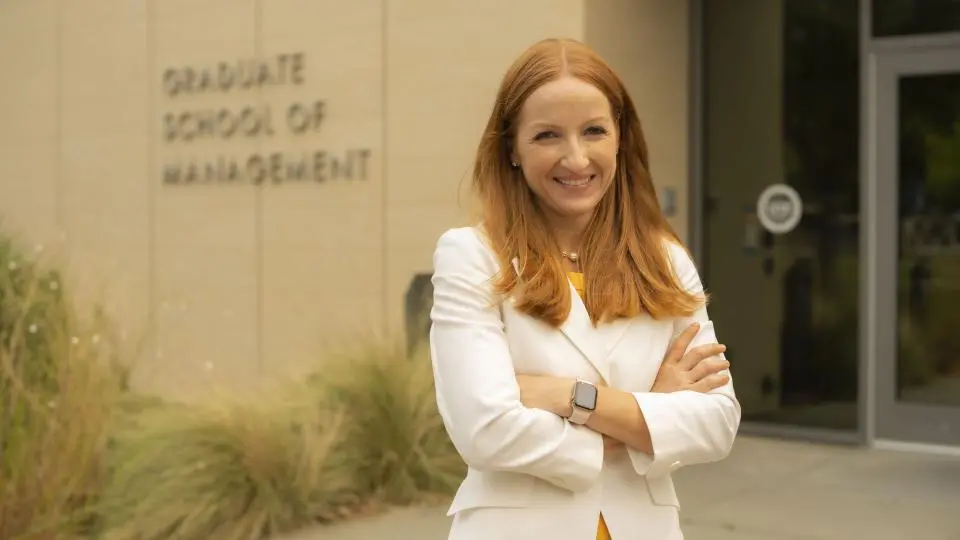
— Vanessa Errecarte, Double Aggie alumna and 2014 graduate of the Full-Time MBA program.
Dozens of my students have these inspiring stories, but it was these three who eventually told me to stop keeping this to myself and write a book.
Why I Almost Didn’t Write It
At first, I thought these students must be kidding. I’d write a book when I’m ready to retire. Then I realized they were asking me to do exactly what I ask them to do: don’t wait to share knowledge that could help someone.
So, I spent 18 months writing a book proposal, pitching publishers and then writing the actual book. Each chapter leads with a case study to illustrate the lesson I teach, and twelve of those belong to my students.
The other day, everything came full circle when an early reader who reads no fewer than 50 books a year told me the book changed her life. That is my “why.” Wouldn’t it be amazing if the internet turned into a generous and helpful place?
It’s Your Turn
Here’s what I want you to take away:
It is a complete fallacy that only top-of-industry thought leaders or full-time influencers get to own a corner of the internet. The internet is for all of us. But the courage to step out is yours to take.
Most people aren’t waiting for more knowledge. They’re waiting for more confidence. I’m not sure when you’ll get that (even I wish mine still came around more), but what I do know is holding back your ideas because of fear means holding back knowledge that could genuinely help someone. Framed that way, would you still hold back?
Disney started as a mouse and an idea. Coke started as a tonic. Neither waited to be perfectly curated. Today, where everyone risks disappearing into a sea of AI sameness, your personal brand is the best tool you have to stay relevant and remembered.
Welcome to the age of distinction. And the good news? You don’t have to be born with it. I just showed you how.
Will you try it?
Vanessa Errecarte is an award-winning marketing consultant, two-time Teacher of the Year at the UC Davis Graduate School of Management, and the author of Valuable & Visible: Redefining Personal Branding by Leading with Impact Over Image (Wiley, May 2026).
Related content

Pursuing Your MBA: 5 Must-Know Tips to Become an Expert Marketer
Amplify word-of-mouth marketing with five surprising strategies

Barbie Buzz and Brand Value. Is It Real?
Financial Times case study on Mattel and Warner Bros. movie
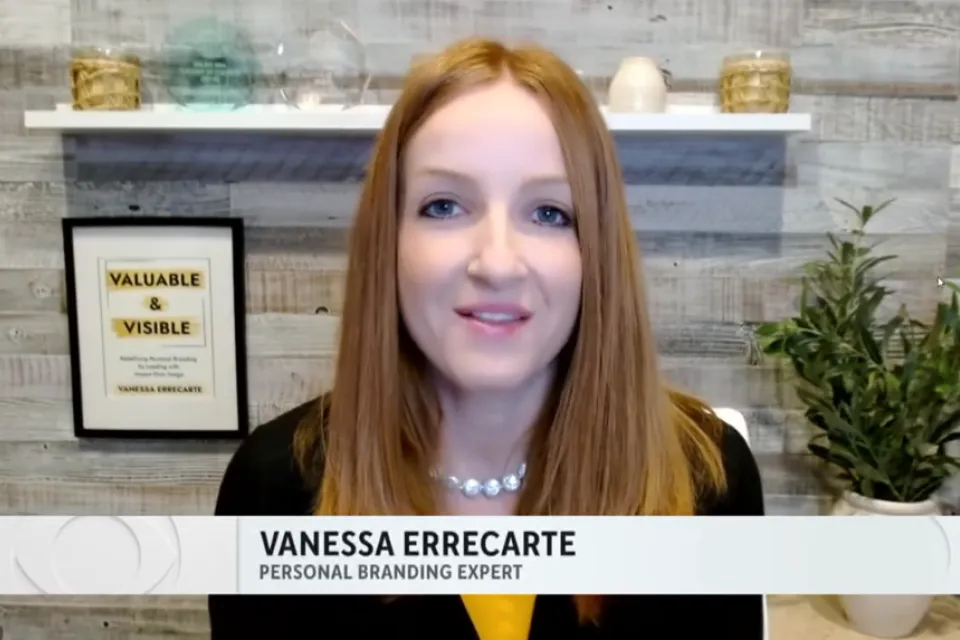
AI Hiring Tools Reshape Job Search as Applicants Struggle to Stand Out
UC Davis alumna and lecturer Vanessa Errecarte shares how job seekers can rise above the algorithm